When Should You Repair a Concrete Driveway Instead of Replacing It
Your driveway works hard in Colorado Springs, CO. Between freeze-thaw cycles, intense sun, deicing salts, and heavy vehicles, concrete takes a beating. The big question is when concrete driveway repair is the smarter move than a full replacement. This guide explains how pros size up surface wear, cracks, settlement, and drainage so you can choose with confidence. If you are already comparing options, start by reviewing our local concrete repair services to see what issues can often be corrected without tearing everything out.
Repair Or Replace: A Simple Rule For Colorado Springs Driveways
A practical way to think about repair versus replacement is to look at the cause, the spread, and the safety impact. If the underlying base is sound and the damage is limited to certain areas, repair is often the best value. If the base has failed in several spots or the slab keeps moving season to season, replacement may be the more reliable long-term solution.
In neighborhoods from Briargate to Old Colorado City, many driveways show similar patterns: shallow surface scaling near the street where plows pass, hairline cracks that open in winter, and slight settling along the edges. Those conditions are common and often repairable when addressed early.
Common Types Of Driveway Damage And What They Mean
Pros look at what type of damage you have and why it formed. Each pattern gives clues about the health of the slab and the base beneath it.
- Hairline and narrow cracks: Often related to shrinkage, temperature swings, or minor movement. Usually repairable when the slab is otherwise stable.
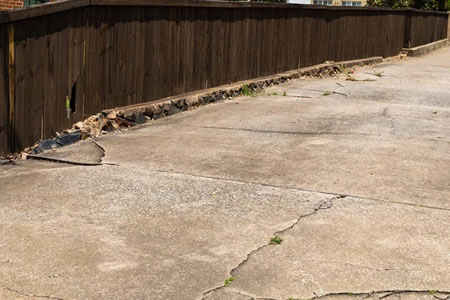
- Wider or offset cracks: Suggests movement, poor base support, or drainage issues. May be repairable in isolated areas, but widespread offsets point toward replacement.
- Surface scaling or spalling: The top layer flakes from freeze-thaw stress or salt exposure. Localized spots can be resurfaced; widespread scaling across large areas may not bond well to repairs.
- Settlement or sinking panels: Soil consolidation or water washout causes slabs to dip. Lifting and stabilization can work when the concrete is intact and the voids are accessible.
- Heaving at joints: Frost or expansive soils push panels upward. If movement recurs annually across multiple joints, replacement and base correction are often considered.
Local insight: Colorado Springs’ elevation brings quick freeze-thaw swings that can open small cracks. Schedule evaluations in late spring or early fall when the slab is drier and movement is moderate. Avoid harsh deicers; sand for traction is gentler on concrete.
Local Factors In Colorado Springs, CO, That Speed Up Concrete Wear
Our climate is tough on concrete. Daytime melt and nighttime refreeze drive water into pores and joints. When that water expands into ice, it pries at the surface and along cracks. On the east side near the Powers corridor and out toward Falcon, wind exposure dries surfaces fast, which can lead to early-age shrinkage cracks if the slab was poured in hot, dry conditions. In hilly areas toward the west side, run-off from roofs and slopes can carry fines out from under driveway edges and cause settling over time.
Traffic patterns also matter. Repeated point loads from SUVs or trucks turning in the same spot can polish the surface and stress joints. Add deicing salts from the street, and you get a recipe for scaling near the apron. None of these are automatic deal breakers. They simply guide whether targeted driveway crack repair will hold or if a fresh start is more reliable.
How Pros Evaluate A Damaged Driveway
When a concrete contractor evaluates your driveway, they are checking more than the cracks you can see. They look for patterns of movement, moisture sources, and how the slab responds across seasons. An evaluation often includes:
- Mapping cracks and joints to see if movement aligns with drainage or downspouts.
- Sounding the surface to find hollow or delaminated areas that could affect bonding.
- Checking slope and water flow to confirm whether pooling or run-off is undermining edges.
- Assessing soil conditions and any nearby landscaping that may contribute to saturation.
Based on these checks, the contractor will outline repair paths such as lifting settled sections, stabilizing voids, sealing appropriate cracks, or resurfacing limited areas. If these options cannot address the root cause or if the damage is too widespread, they will explain why a replacement would be the better investment.
When Repair Is Likely The Right Choice
Repair shines when the slab is structurally sound and the issues are isolated. Homeowners across Briargate, Stetson Hills, and Fountain often see success with focused repairs that stop water from getting in and slow further wear. Repair is usually worth a close look if:
• Damage is limited to a few areas rather than the entire driveway.
• The base is stable and not pumping water or fines with each step or vehicle pass.
• Cracks are tight and not creating hazardous height differences.
Resurfacing and targeted crack treatments can refresh the appearance and extend the service life. Lifting can bring settled panels back into alignment so doors clear and trip hazards are reduced.
When Replacement Is The Smarter Long-Term Move
Replacement comes into play when the slab has multiple failure points or the base needs correction. If you see repeating patterns every winter, large sections of scaling, or ongoing settlement that returns after patching, it is often more practical to rebuild. A well-installed new driveway with proper base prep, joints, and drainage can deliver a longer lifespan and a more consistent look.
Think of it like repairing a roof with leaks in many planes. There is a point where continuing to patch costs time and still leaves you worried about the next storm. The same goes for a driveway with widespread structural issues.
Benefits Of Timely Concrete Repair
Waiting rarely helps concrete. Small cracks let in water, which widens them and lifts edges in winter. Acting early offers clear benefits:
- Reduces moisture intrusion that accelerates freeze-thaw damage.
- Improves safety by addressing trip risks before they grow.
- Protects adjacent garage slabs and sidewalks by managing drainage.
- Refreshes curb appeal, especially if you plan to sell in the next season or two.
Address small problems before winter sets in to avoid bigger, costlier repairs later.
Repair Options You Might Hear About
Every driveway is unique, but the solutions are fairly consistent. Your contractor may discuss lifting settled panels, stabilizing soft spots, sealing active cracks that can take flexible material, and resurfacing select areas with bonding systems when the base slab is a good candidate. The key is choosing the option that targets the cause, not just the symptom.
If you want a quick overview of what is typically included in professional repair work here in town, our page on concrete repair services explains common approaches in simple terms. It also clarifies where repairs make sense and where they are unlikely to last.
What Homeowners In Colorado Springs Should Watch Between Seasons
Colorado Springs moves fast between warm days and freezing nights, and that swing shows in concrete. Keep an eye on areas where water lingers after light snowmelt. Watch your downspouts and sump discharge so they do not dump water along the driveway edge. If you notice new cracking right after a cold snap or panels shifting upward at a joint, note the date and take a photo. That timeline helps your contractor connect damage to weather patterns and recommend the right fix.
Never ignore pooled water near your garage door or at the driveway apron; trapped moisture often signals drainage or base issues that deserve prompt attention.
How To Choose A Concrete Contractor In Colorado Springs
Select a contractor who evaluates causes, not just symptoms. Look for clear explanations, photos or sketches of problem areas, and a step-by-step plan that addresses drainage, movement, and surface condition. Ask about the best season for the work in our climate and how they prepare joints and edges to prevent early wear. A thoughtful plan will focus on longevity and safety rather than quick cover-ups.
To get oriented, you can start at the K&D Concrete and Stucco home page. Many homeowners search for concrete driveway repair in Colorado Springs, CO and then review recent project notes and service details before booking a site visit. If you have questions now, talk with a specialist at 719-428-5540.
Real-World Scenarios Around Town
Old Colorado City: A mature maple sends roots under the driveway and lifts a corner. If lifting puts the panel back into plane and root pressure can be relieved or redirected, repair may be effective. If several panels are affected and the tree remains, replacement with base adjustments may be wiser.
Northeast Colorado Springs: A driveway near a busy street shows scaling and pitting close to the apron. If the damage is limited to that zone, resurfacing the affected area and sealing intact sections can extend life. If scaling spreads widely into the main panels, a larger rebuild may be discussed.
East of Powers: Newer subdivision with thin topsoil over fill. One panel settles near a downspout. If the concrete is sound, lifting and stabilizing the base typically solves it. If several panels settle along the same trench line, a broader fix may be needed.
Appearance Matters, But Structure Comes First
It is natural to focus on looks. Discoloration, faint map cracking, or patched spots can be annoying, but they do not always demand replacement. If the base is stable and the slab has good bearing, appearance upgrades through targeted resurfacing can make a big difference. When the slab keeps moving, it is better to correct the structure than chase cosmetics.
Cosmetic fixes on a moving slab will not last; stabilize first, then improve the surface.
Next Steps: Get A Clear Plan For Your Driveway
Now that you know how pros evaluate repair versus replacement, the next step is a site visit. A careful assessment in person is the only way to confirm what will hold up through our winters and sun. If your driveway shows manageable issues, you will likely get a straightforward plan for sealing, stabilizing, lifting, or resurfacing. If not, you will still gain clarity about what a proper rebuild involves and how to protect the new work going forward.
Ready to schedule professional concrete driveway repair in Colorado Springs, CO? Talk with the team at K&D Concrete and Stucco to get your driveway evaluated the right way.
You can review service details before you call by visiting our page on driveway crack repair. Or connect directly at 719-428-5540 to set up a convenient on-site evaluation.